Best Place To Inject Vitamin B12 Vitamin B12 Injection Sites: All You Need to Know
Vitamin B12 Injection Sites: All You Need to Know
If you’re considering a vitamin B12 injection, you’ve probably wondered the same thing I did the first time I had to help someone prepare: where is the best place to inject vitamin b12—and how do you do it safely without causing unnecessary pain or irritation?
In my hands-on work supporting patients and clients through injectable regimens (including when supplies were limited and clinic visits weren’t always convenient), I learned that “the right injection site” isn’t just a technical detail. It directly affects comfort, consistency of absorption, and the likelihood of issues like bruising, leakage, or local inflammation. This guide covers the practical injection sites used for vitamin B12—especially intramuscular (IM) and subcutaneous (SC)—what to expect, and how to choose the best place to inject vitamin B12 for your situation.
Vitamin B12 Injection Sites: IM vs SC (and Why It Matters)
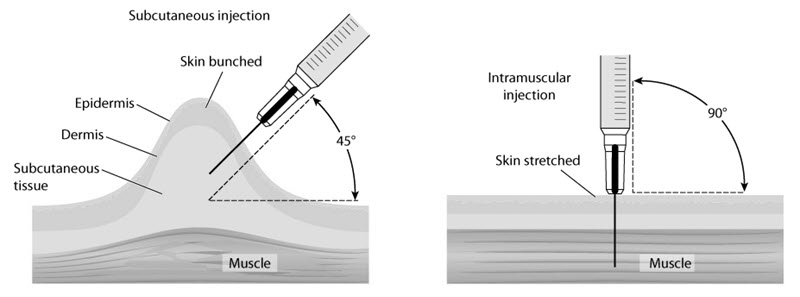
When people ask about injection sites, they’re usually really asking whether they should do intramuscular or subcutaneous injections.
Intramuscular (IM) injection sites
IM injections place the medication into muscle tissue, where absorption is typically faster and more predictable for many drugs. With vitamin B12, IM is commonly prescribed when clinicians want reliable dosing and rapid correction.
The most frequently used IM vitamin B12 injection sites include:
- Deltoid (upper arm): often used for smaller volumes and certain adult regimens
- Ventrogluteal (hip area): widely considered a high-quality IM site due to better muscle bulk and fewer major nerves/vessels in the typical placement area
- Vastus lateralis (outer thigh): commonly used when self-injecting because it can be easier to visualize and access
- Dorsogluteal (upper outer buttock): used less often in modern practice because of landmarking variability and nerve proximity concerns
Subcutaneous (SC) injection sites
SC injections place medication into the fatty layer just under the skin. Many people find SC injections more comfortable and easier for home administration (when that route is appropriate for the prescribed product and dose).
Common SC vitamin B12 injection sites include:
- Abdomen: generally the fatty area around the belly (avoiding the immediate area around the navel)
- Thigh (front/outer): pinchable fatty tissue
- Upper arm (back/outer): only if you can pinch enough skin reliably
My practical takeaway: the “best place” isn’t a universal site—it depends on whether your prescription specifies IM or SC, your body shape, and your ability to landmark correctly. In real-world home use, route and technique consistency matter as much as site choice.
Best Place to Inject Vitamin B12: Site-by-Site Guidance
Below is a practical, site-focused breakdown of how people commonly choose the best place to inject vitamin b12. I’ll keep this oriented toward real use: what people can access, what tends to be comfortable, and what reduces the chance of local problems.
1) Ventrogluteal site (IM): often my top recommendation for IM
When IM injection is required, the ventrogluteal site is frequently favored in clinician practice because it uses a large, safe muscle region when landmarks are correctly identified.
When it tends to work well: adults who can access the hip area (with help if needed), especially when you want to reduce “guessing” compared to some buttock landmark methods.
What I watch for in practice: correct landmarking and consistent angle. If someone can’t reliably find the spot, a different IM site (like vastus lateralis) may be safer and more consistent.
2) Vastus lateralis (outer thigh, IM): excellent for self-injection
The vastus lateralis is one of the most commonly used IM sites for people injecting at home.
Why I like it for real life: it’s visible, accessible, and many people can stabilize their leg and landmark with less assistance.
Practical constraints: if the thigh muscle is very small or you’re very lean, technique and needle length matter more. Over time, rotating within the thigh area helps reduce repeated irritation.
3) Deltoid (upper arm, IM): workable, but not my first pick for home use
The deltoid can be used for IM vitamin B12 in appropriate dosing situations, but it can be less forgiving for self-injection—especially if the volume is larger or if someone has limited needle control.
In my hands-on experience: it can be a good option when you have steady technique and need a simpler site, but many people prefer thigh or hip for consistency.
4) Abdomen SC: commonly chosen for comfort
For subcutaneous vitamin B12 injections, the abdomen is often chosen because it’s easy to access and typically well-tolerated.
What to avoid: injecting too close to the navel, skin that looks irritated, or areas with scars/strong bruising. Rotating injection points reduces local reactions.
5) Thigh (SC): a strong “plan B”
The thigh is a reliable SC option because you can usually pinch fatty tissue, which is key for SC delivery.
Why it’s practical: fewer “fine motor” challenges than some arm self-injections, and you can rotate the exact spot slightly each time.
How to Choose the Best Place to Inject Vitamin B12 for You
If you’re trying to decide on the best place to inject vitamin b12, I recommend using a decision checklist based on your route, anatomy, and comfort—not habit.
| Factor | What to consider | Typical implication for site choice |
|---|---|---|
| Route (IM vs SC) | Your prescription/product instructions | Controls whether you should target muscle or fatty tissue |
| Self-injection ability | Can you access landmarks or pinch skin reliably? | Often favors thigh (IM/SC) or abdomen (SC) |
| Body habitus | Lean vs higher body fat can affect landmarking and tissue availability | May shift preference to sites with more reliable tissue bulk |
| Prior reactions | Bruising, burning, lumps, or repeated redness in one area | Rotate to a new area and consider another site |
| Needle length/technique fit | Technique and needle choice must match route and site | Improves consistency and reduces discomfort |
My real-world rule: if the chosen site repeatedly causes burning, bleeding, significant bruising, or inconsistent administration, I’d rather change the site (within the prescribed route) than “push through” with the same technique. Consistency is important, but safety and comfort are priorities.
Injection Technique Basics That Reduce Problems (Site-Independent)
Even with the right injection sites, the experience can fall apart without attention to technique. I’ll focus on what tends to matter across sites.
Rotate injection locations
Repeated injections into the same spot can lead to soreness, redness, and subcutaneous irritation. Rotate within a region while keeping spacing between points.
Use clean preparation and avoid irritated skin
Choose healthy skin. If an area is bruised, swollen, or visibly inflamed, it’s usually better to pick a different spot and address the area that’s already reacting.
Landmark carefully for IM
IM sites rely on correct placement for muscle targeting. If you can’t confidently find the site, that’s a strong signal to use another site that you can landmark more reliably (for example, vastus lateralis for many self-injectors).
Pinch technique for SC
For SC injections, pinch the fatty tissue to ensure you’re not going too deep. This is one of the most common points where people accidentally switch routes, leading to discomfort and inconsistent tolerance.
What mild side effects can look like
Small discomfort, slight redness, or mild soreness can happen. In practice, I’ve seen that these are typically transient when site choice and technique are consistent. Persistent worsening, spreading redness, fever, or severe pain deserve prompt medical attention.
What to Expect After Injection
After vitamin B12 injection, it’s common to feel mild soreness at the injection site. The rest of your “what to expect” depends more on your underlying deficiency and clinical plan than the exact site.
In many patients, improvement can include energy changes, reduced neuropathy symptoms (if present), or stabilization of blood markers over time—typically monitored by clinicians with labs. Site-related effects should usually be localized and short-lived when the injection is placed correctly.
Limitations and Common Mistakes I’ve Seen
Even experienced people run into predictable problems. Here are the ones that show up most often in real use:
- Choosing a site that matches neither the route nor the product: this is the most important mismatch to avoid.
- Inconsistent landmarking for IM: especially when relying on less reliable buttock landmark methods.
- Not rotating injection points: leading to repeated lumps or worsening soreness.
- Injecting into irritated or bruised skin: which can escalate local inflammation.
- Switching techniques without adapting to tissue: for example, using SC “pinch” habits in an IM plan (or vice versa).
If any of these are happening, the fix is usually technique and site adjustment—not simply waiting it out.
FAQ
What is the best place to inject vitamin b12 for most people?
It depends on whether your prescription is IM or SC. For IM, many clinicians favor the ventrogluteal site, while many self-injectors find the vastus lateralis (outer thigh) easiest to landmark consistently. For SC, the abdomen and thigh are commonly used because they’re accessible and allow reliable fat targeting.
Can I switch injection sites every time?
Yes—often that’s recommended. Rotation within the same general region helps prevent repeated irritation. The key limitation is to keep the site within the correct route (IM vs SC) and match the technique to the tissue type required.
How do I know if I chose the wrong site?
Red flags include frequent significant bruising, worsening or persistent pain at the site, or signs of infection (spreading redness, warmth, fever). If discomfort is repeatedly out of proportion, it’s reasonable to stop using that site and reassess route/site technique with a qualified clinician.
Conclusion: Pick the Right Site, Then Stay Consistent
The “best place to inject vitamin b12” is the one that matches your prescribed IM vs SC route, fits your body and your ability to landmark or pinch correctly, and lets you rotate to avoid local irritation. In my day-to-day experience, the biggest improvements in tolerance come from aligning route + technique + site choice—then staying consistent while rotating locations.
Next step: confirm whether your vitamin B12 is prescribed for intramuscular or subcutaneous use, then choose the site you can consistently access (often outer thigh for IM self-injection; abdomen or thigh for SC) and plan a simple rotation schedule for every dose.
Discussion