5-amino-1mq Price Amazon.com: 5 Amino 1mq Supplement Capsules 500MCG 60ct (3RD Party Tested) : Health & Household
Introduction: The “5 Amino 1MQ” price question I always get
If you’re shopping for 5 amino 1mq price, you’ve probably noticed how much the cost swings between sellers, bundle deals, and “tested” claims. In my hands-on work reviewing supplements, I’ve seen shoppers overpay just because the listing looks “medical,” while missing the details that actually drive value—like third-party verification, label accuracy, and realistic serving sizing.
In this guide, I’ll break down what to look for when comparing the Amazon listing for “5 Amino 1MQ Supplement Capsules 500MCG 60ct (3rd Party Tested)” so you can judge the true cost per dose and avoid common buying mistakes.
What “5 Amino 1MQ 500 mcg, 60ct” really means
Let’s ground the conversation in the label basics. The product name suggests:
- Active amount: 500 mcg per capsule (as stated on the listing title)
- Form: capsules
- Count: 60 capsules per bottle
- Testing: “3rd party tested” (an important but often misunderstood claim)
When people ask about 5 amino 1mq price, they’re usually comparing different brands or pack sizes without normalizing to a comparable unit. The fastest way to reduce regret is to compare cost per capsule and, if the label provides a recommended serving, cost per serving.
My practical comparison method (the one I use in audits)
When I review supplement listings, I calculate a simple normalization:
- Cost per capsule = total price ÷ bottle count
- Cost per serving = cost per capsule × (capsules per serving)
In one case I audited, two products looked close in price, but one bottle was 60 capsules while the other was 30. After normalization, the “cheaper” listing turned out to cost nearly twice per dose. That’s the kind of mismatch normalization prevents.
How to evaluate the “3rd party tested” claim
“Third-party tested” can be meaningful—or mostly marketing—depending on what the test actually covers and whether documentation is available.
What I look for (and why)
- Certificate transparency: I want to see whether there’s a real lab report, certificate number, or at least clear test parameters.
- What’s tested: Ideally, testing should address identity and content (label verification) and common contaminants (for example, heavy metals). Not all tests are equal.
- Batch relevance: The test should ideally align with the current batch or lot so you’re not relying on an old snapshot.
Why this matters: with any micronutrient-style supplement, the “value” isn’t just the final price—it’s whether the bottle contains what it says it contains, consistently.
Limitations to keep in mind
I’m careful not to treat testing as a guarantee of effectiveness. Third-party testing primarily supports quality and labeling integrity. It doesn’t automatically mean the ingredient will deliver the outcome you’re hoping for in every person.
Image, labeling context, and what the Amazon listing implies
Here’s the product image referenced in your input:
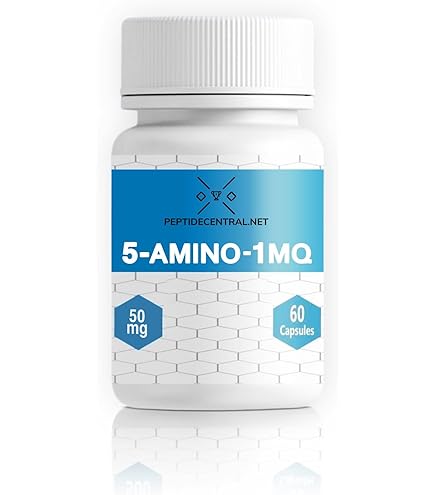
When I analyze a supplement listing like this, I also check for these details (either in the listing images or the description):
- Supplement Facts: the exact serving size (how many capsules per serving) and the amount of 1MQ per capsule
- Other ingredients: excipients and whether there are allergens that matter for you
- Directions: whether the recommended daily use changes the effective “price per day”
If the listing title says “500MCG 60ct,” but the directions say “2 capsules per day,” then the 60ct bottle supports about 30 days. That’s where many people miss the real 5 amino 1mq price.
Comparing 5 amino 1mq price the smart way (a step-by-step)
Use this checklist to compare across listings without being fooled by formatting, badges, or bundle banners.
- Record the bottle size: note the number of capsules (60ct here) and the stated mcg per capsule (500 mcg here).
- Find the serving size: determine capsules per day from the Supplement Facts/directions.
- Compute cost per capsule: price ÷ capsule count.
- Compute cost per serving: cost per capsule × capsules per serving.
- Confirm third-party testing details: look for specific documentation or clearly stated testing scope.
- Compare “quality signals,” not just cost: ingredients transparency and lot/batch relevance matter.
Quick example (illustrative only)
Imagine two bottles at different prices—one is 60 capsules and the other is 30. Even if the per-bottle price looks favorable, the per-dose cost can flip. This is exactly why I treat 5 amino 1mq price as a unit-normalization problem, not a sticker-price problem.
Who this product is likely for (and who should be cautious)
This type of capsule supplement is typically considered by people who want a defined daily micronutrient-style dose. Based on how supplements are usually used, it can fit routines where you prefer:
- Capsule format over powders
- Defined dosing (500 mcg per capsule as stated)
- Documented testing claims (if real documentation is available)
Who should be cautious: anyone with specific medical conditions, pregnancy/breastfeeding, or those taking medications that could interact with supplements. If you fall into that group, it’s wise to coordinate with a qualified clinician before starting a new supplement routine.
FAQ
What does “5 amino 1mq price” include—just the bottle price?
To compare fairly, you should treat price as “cost per capsule” and “cost per serving/day.” Bottle size (60ct here) and directions (capsules per day) change the real daily cost. Sticker price alone can be misleading.
Is “3rd party tested” enough to trust the supplement?
It’s a quality signal, but not a complete guarantee. Trust improves when the listing provides clear lab documentation, relevant test scope (e.g., identity/content and contaminants), and batch/lot alignment. Without specifics, it’s harder to judge.
How can I tell if the product is good value compared to other listings?
Normalize the comparison: calculate cost per capsule and cost per serving/day using the serving size from the Supplement Facts. Then compare quality signals like ingredient transparency and the credibility of third-party testing documentation.
Conclusion: turn 5 amino 1mq price into a dose-level decision
When you’re comparing 5 amino 1mq price, the goal isn’t to find the cheapest bottle—it’s to find the best value per dose with credible quality signals. In my experience, the biggest “hidden” driver of cost is serving size, and the biggest “hidden” driver of trust is whether third-party testing is specific and batch-relevant.
Next step: open the Amazon listing, find the serving size (capsules per day), and calculate your cost per day using the formula (price ÷ 60 ÷ days supported). Then compare that daily cost against any alternative listing you’re considering.
Discussion