How Many B12 Injections Can You Take In A Month what conditions require b12 injections Are B12 Shots Safe? Royal Palm Beach Medical Group
Introduction: If you’re wondering about B12 shots, you’re not alone
Many patients ask us the same practical question: how many B12 injections can you take in a month—and whether that schedule is appropriate for their specific deficiency. In my hands-on work with patients who needed B12 repletion, I’ve learned the hard way that “more is better” thinking can backfire: dosing that’s too frequent, too long, or used without confirming the cause of deficiency can waste time and sometimes worsen side effects.
This guide explains what conditions require B12 injections, how clinicians typically set a monthly injection plan based on the underlying diagnosis, and the key safety considerations that determine whether B12 shots are safe for you—specifically in a real-world clinical setting like Royal Palm Beach Medical Group.
First: what B12 injections actually treat (and why that matters for dosing)
Vitamin B12 injections are used when your body can’t absorb B12 effectively, when B12 deficiency is clinically significant, or when rapid repletion is needed. The “right” monthly schedule depends less on convenience and more on the reason you’re low and how quickly your labs and symptoms respond.
Common clinical indications for B12 injections
In my experience, the most frequent conditions that prompt B12 injections fall into a few buckets:
- Pernicious anemia (autoimmune loss of intrinsic factor): absorption is impaired, so oral therapy may fail and injections are often preferred.
- Malabsorption syndromes: conditions affecting the small intestine (for example, Crohn’s disease affecting the terminal ileum, celiac disease not controlled, or other malabsorptive states).
- Post-bariatric surgery (especially gastric bypass): reduced stomach acid and altered anatomy can significantly reduce B12 absorption.
- Severe deficiency with symptoms (neurologic symptoms like numbness/tingling, balance issues, or significant anemia): clinicians may choose injections to restore levels promptly.
- Dietary insufficiency when absorption isn’t the main issue: injections may be used initially if levels are very low or if adherence to oral therapy is uncertain.
Why the underlying cause changes the “monthly” answer
When B12 deficiency is due to impaired absorption (pernicious anemia, bariatric surgery, malabsorption), the strategy often shifts from “how many per month” to “how long do we need a repletion phase and how should we transition to maintenance.” If the deficiency is nutritional but mild, the plan may differ and injections may be unnecessary or used briefly.
So when people ask how many B12 injections can you take in a month, the most clinically sound response is: it depends on whether you’re in a repletion phase or a maintenance phase, and on confirmed labs plus symptom severity.
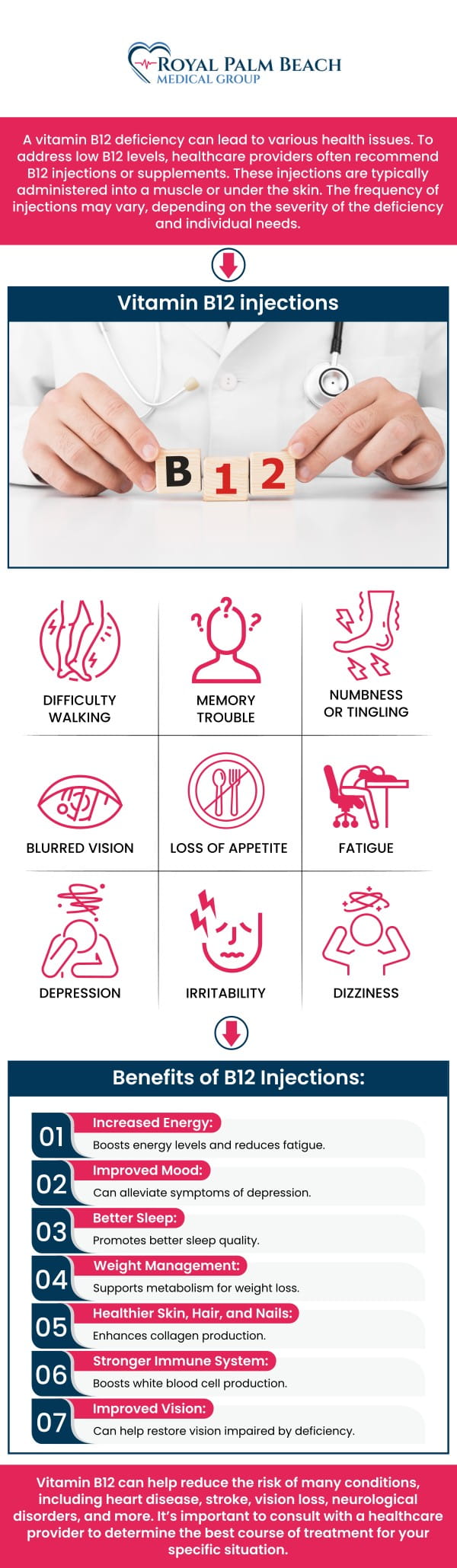
Are B12 shots safe? What I look for in real patients
For most people, B12 injections are considered generally safe when administered appropriately and when the patient is monitored. In clinics, we focus on three safety pillars: confirming the indication, using evidence-based dosing schedules, and watching for side effects or red flags.
Who typically tolerates B12 injections well
- Patients who have confirmed low B12 (or strong clinical suspicion) and are receiving injections under a clinician’s direction.
- Patients transitioning from repletion to maintenance with periodic lab checks.
- People who do not have a history of injection-site reactions or sensitivity to injection components.
Potential side effects (what’s common vs. what’s concerning)
Most side effects—when they occur—are mild and localized. Still, I always advise patients to report any reaction rather than assuming it’s “normal.”
- Common: injection-site pain, mild swelling, or temporary discomfort.
- Less common: headache, nausea, or restlessness.
- Concerning: severe allergic-type symptoms (rash, wheezing, facial swelling, trouble breathing) or rapidly worsening neurologic symptoms.
If you experience any concerning symptoms, the safe approach is to contact your clinician promptly.
One practical point many patients miss
Sometimes the real issue isn’t “not enough B12,” but another deficiency or diagnosis mimicking B12 deficiency (for example, folate deficiency or hematologic conditions). In my practice, that’s why we don’t rely solely on how someone feels—we use labs and clinical context to avoid treating the wrong thing.
How many B12 injections can you take in a month? A clinician-style framework
Because dosing schedules vary by the cause and severity, it’s best to think in phases rather than a single “monthly number.” Here’s the decision framework I use when building a practical injection plan with patients.
Step 1: Determine whether you’re in repletion vs. maintenance
- Repletion phase: used to raise B12 levels and improve symptoms more quickly.
- Maintenance phase: used to prevent recurrence once levels improve.
Step 2: Consider severity and symptom profile
Patients with significant anemia, neurologic symptoms, or very low B12 levels may require a different frequency and duration of injections than someone with mild deficiency and no neurologic complaints.
Step 3: Plan based on monitoring—not guesswork
A safe plan typically includes periodic reassessment. That may involve follow-up labs and symptom tracking so the injection schedule can be adjusted rather than continued indefinitely.
Typical patterns patients ask about (and why they vary)
When people search how many B12 injections can you take in a month, they often have one of these patterns in mind:
- Higher-frequency repletion early on (often more frequent weekly dosing during the initial phase).
- Lower-frequency maintenance later (often spaced out monthly or less frequently, depending on diagnosis and response).
I’m intentionally not giving a universal “max number per month” because that oversimplifies medical decision-making. Instead, the safest answer is: injection frequency should match your diagnosis (malabsorption vs. nutritional), your severity, and your response on monitoring.
What makes a B12 injection plan “safe” long-term
Even though B12 is water-soluble, safety still depends on smart clinical management—especially if you continue injections for months or years.
Key safety practices
- Confirm the diagnosis: low B12 should be supported by labs and clinical context.
- Use a phase-based schedule: repletion differs from maintenance.
- Reassess response: if symptoms and labs aren’t improving, we should reconsider the cause (and not simply increase frequency).
- Review contributing factors: medications, diet, alcohol use, GI conditions, and prior surgeries can all affect B12 status.
When you should be especially cautious
If you have complex neurologic symptoms, significant anemia, or a history suggesting pernicious anemia or malabsorption, it’s important not to self-direct the schedule. In those cases, clinician-guided dosing and follow-up are part of safe care.
FAQ
How many B12 injections can you take in a month?
There isn’t one universal monthly number. The frequency depends on whether you’re in a repletion phase or a maintenance phase, your B12 level severity, your symptoms, and the underlying cause (like pernicious anemia, malabsorption, or post-bariatric changes). The safest approach is a clinician-directed plan with follow-up to adjust frequency.
Are B12 shots safe if I only have low-normal labs?
They may be safe, but injections may not be necessary. Mild or borderline results can require repeat testing or evaluation for other causes of symptoms (like folate deficiency or other hematologic issues). A clinician should decide based on labs plus clinical context.
Can I take B12 injections indefinitely?
Some patients require long-term maintenance injections, especially when absorption is permanently impaired. However, long-term use should still be monitored with periodic reassessment so the dose and frequency stay appropriate and the original cause remains addressed.
Conclusion: get the schedule right, not just the injection
B12 injections can be a safe and effective treatment for confirmed B12 deficiency—especially when the condition involves impaired absorption, severe deficiency, or symptomatic anemia. The question how many B12 injections can you take in a month doesn’t have a one-size-fits-all answer; a safe monthly plan follows the logic of repletion vs. maintenance, your diagnosis, and your monitored response.
Next step: If you’re considering B12 injections, ask your clinician to base the schedule on your lab results and underlying cause, then set a follow-up plan to confirm improvement before continuing or spacing out injections.
Discussion